Every fence reaches a point where something gives. A post starts to lean, a few boards split, a gate stops latching, or a storm drops a limb across a whole section. When that happens, most homeowners in Gastonia ask the same question: should I fix what is broken, or is it time for a new fence?
There is no single answer that fits every yard. A fence with one bad post and a solid frame is a very different job from a fence that is rotting along its whole length. The good news is that the decision is not a guess. It comes down to a handful of things you can look at yourself, plus an honest inspection from someone who builds and repairs fences for a living.
J & G Fence Company, Inc. started with repair work. In September 1989, after Hurricane Hugo knocked down fences across the Carolinas, two best friends, Joe and Gary, began putting them back up for their neighbors around Gastonia. More than 35 years later, we still do both: we repair fences that are worth saving, and we build new ones when a repair would only buy a little time. This guide walks through how we think about that choice, so you can walk your own fence line with a clearer eye.
Start With the Posts
If you only check one thing, check the posts. The posts carry the weight of the entire fence. Rails hang from them, boards or panels attach to the rails, and gates swing from them. When the posts are sound, almost anything above them can be fixed. When the posts are failing, everything above them follows.
Walk the fence and push gently on each post near the top. A healthy post should feel firm. Then look closely at the base, right where the post meets the ground. On a wood fence, this ground line is where rot usually starts, because the wood stays damp there longer than anywhere else. Press a screwdriver into the wood at the base. If it sinks in easily or the wood feels soft and crumbly, that post is losing its strength.
Here is a simple way to read what you find:
- One or two weak posts in an otherwise solid fence usually points to a repair. We can reset a post whose footing has loosened or replace a post that has rotted or snapped, then reattach the rails and boards.
- Several weak posts scattered along the line is a judgment call. It often still makes sense to repair, but we will look at the age of the fence and the condition of the rest of the wood before recommending it.
- Most of the posts leaning, soft at the base or failing one after another usually means the fence is near the end of its useful life. Replacing posts one at a time on a fence like this tends to turn into a cycle of repairs.
Look at How Much of the Fence Is Damaged
The next question is simply how much of the fence is affected. Damage that is limited to one area is a very different situation from wear that shows up everywhere.
A tree limb that crushes a single section, a car that clips a corner, or a gate that sags because its hinge post moved are all local problems. The rest of the fence may be perfectly healthy. In cases like these, a repair or a section replacement is almost always the sensible choice. We remove the damaged material, set new posts where needed and rebuild the section to match the rest of the fence as closely as the material allows.
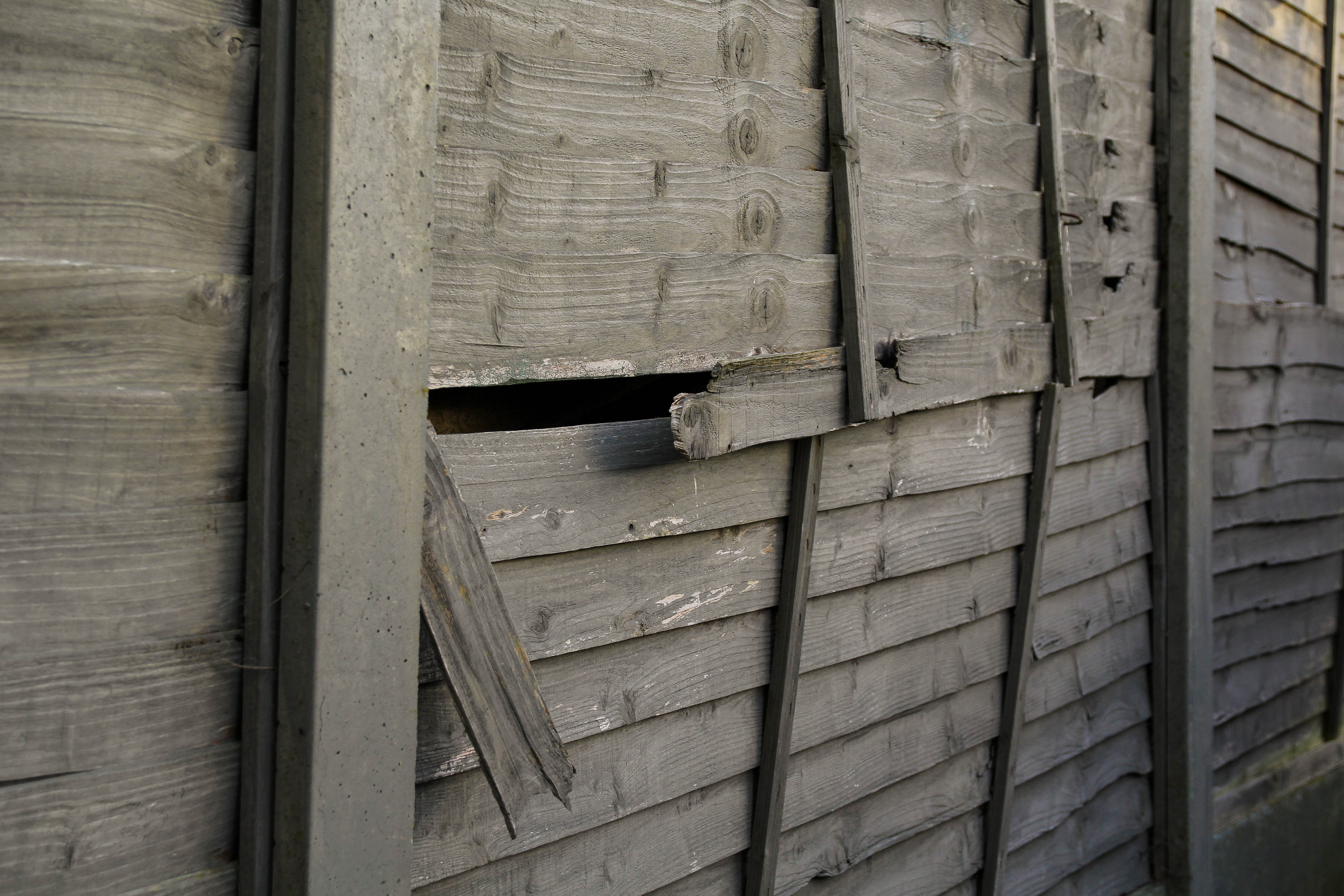
Widespread wear is different. If boards are cracked, warped or loose along the whole run, if rails are rotting in many places, or if the fence sags between posts all the way down the line, then the problem is not one event. It is the age and condition of the whole fence. Fixing one section at a time on a fence like that means paying for repair after repair while the next section keeps getting worse.
A good rule of thumb: if the damage is in one place and the rest of the fence is in good shape, repair it. If the damage is everywhere, start thinking about replacement.
Consider the Age and Material of the Fence
Different fence materials age in different ways, and that affects how a repair will hold up.
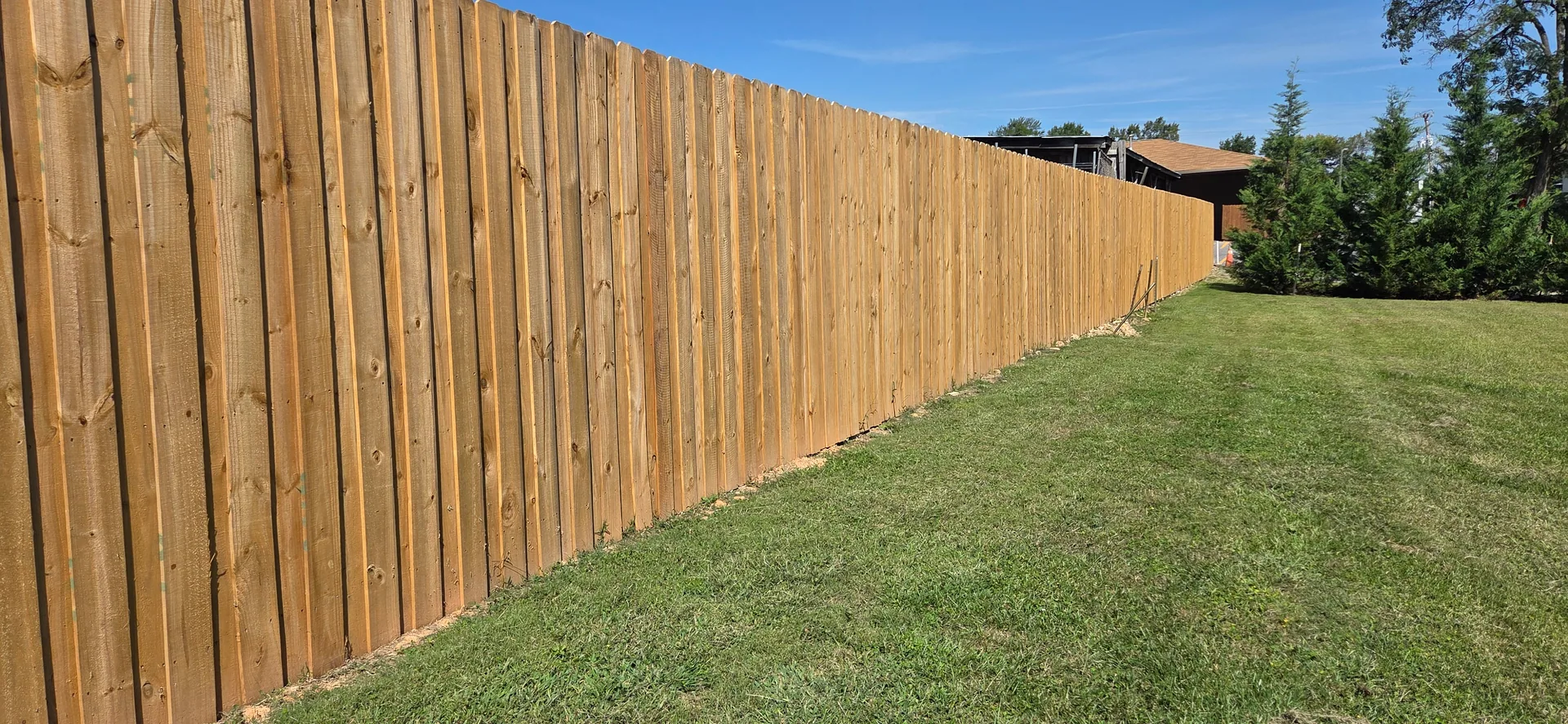
Wood fences are the most common fence we see around Gaston County. Wood can be repaired very well, and new boards, rails and posts tie into an existing wood fence easily. The catch is appearance. New wood starts out brighter than weathered boards, so a repaired section will stand out at first. Over time it weathers toward the color of the rest of the fence. If the existing wood is near the end of its life, though, a new section can end up as the only solid part of a failing fence.
Chain link fences are very repairable. Bent top rails, damaged fabric and broken ties or hardware can usually be replaced without touching the rest of the fence. We match the fabric, rails and hardware to what is already there. Chain link fences often last a long time, so a repair is frequently the right call.
Vinyl fences need little upkeep, but a cracked or broken panel generally has to be replaced rather than patched. Matching an older vinyl fence can be harder if the style or color is no longer made, which is worth asking about before deciding.
Aluminum and ornamental fences hold up well, and individual panels or posts can often be replaced. A panel bent by a fallen limb or a vehicle is usually a straightforward repair as long as matching parts are available.
Age matters for every material. A five-year-old fence with storm damage is almost always worth repairing. A fence that has been standing for many years and is showing wear everywhere may not be, even if only one section is visibly broken today.
Watch for Problems That Keep Coming Back
One of the clearest signs that replacement makes more sense is a repair that does not stay fixed. If you have had the same section repaired more than once, or if you find yourself calling about a different leaning post every few months, the fence is telling you something.
Repeated failures usually mean the problem is bigger than the part being fixed. The posts may have been set too shallow when the fence was built, the wood may be at the end of its life along the whole line, or drainage around the fence may be keeping the ground soaked. Patching the visible damage does not solve any of those.
When we see a pattern like this, we will tell you plainly. Sometimes the honest answer is that another repair is money spent on a fence that is going to keep failing.
Think About What You Need the Fence to Do
A fence is not only a structure. It has a job. It may keep a dog in the yard, give you privacy from a busy road, enclose a pool, or mark a property line. Before you decide between repair and replacement, ask whether the fence you have still does the job you need.
Some common situations where a new fence makes sense even if the old one could be repaired:
- You have a new dog that can jump or dig, and the old fence is too short or has gaps at the bottom.
- You want more privacy than an open picket or chain link fence gives you.
- You put in a pool and need a fence and gates that meet pool code.
- You are selling your home and a worn, patched fence makes the yard look tired.
- You want less upkeep and would rather move from wood to vinyl or aluminum.
If the fence still fits your needs and only part of it is damaged, a repair keeps what you have working. If your needs have changed, a repair can leave you with a fence that is fixed but still not right for your property.
Compare the Cost Over Time, Not Just Today
A repair almost always costs less than a new fence on the day you pay for it. That is why it is usually the right choice when the damage is limited. But the real comparison is cost over time.
If a repair puts the fence back in solid shape for years, it is good value. If it only holds until the next section fails, the costs add up quickly, and you may end up paying for several repairs and then a new fence anyway.
The cost of a repair depends on what broke and why. The things that affect it most are:
- How many posts, rails or sections need work
- The fence material and how easy it is to match
- Whether posts can be reset or must be replaced
- Access to the damaged area, including trees, slopes and tight spaces
- Hauling away broken material and storm debris
- Any gate hinges, latches or hardware that need replacing
For a new fence, the material, height, length, gates and ground conditions all shape the price. Our fence cost guide walks through each of those. In our area, a typical 6 foot wood privacy fence runs about $18 to $27 per linear foot installed, but that is a typical range, not a quote. Your written estimate gives you the real number for your property.
When we look at a fence, we put the options in writing so you can compare them side by side. If a repair will hold, we recommend the repair. If the fence is past saving, we explain why.
What to Do After a Storm
Storms are one of the most common reasons homeowners start asking the repair or replace question, and they often ask it in a hurry. A few steps will help you make a calm decision.
- Stay safe first. Stay away from any fence that is touching a downed power line, and call the utility before doing anything else.
- Photograph the damage. Take pictures of the fence from several angles for your records before anything is moved.
- Keep pets clear of the gaps. A broken section is an easy way out of the yard for a dog.
- Check the posts beyond the obvious damage. Wind pushes hard on solid privacy fences, and soaked ground holds posts less firmly. A fence that looks fine the day after a storm can start to lean several days later.
- Call for an inspection. Have someone look at the whole fence, not only the section that fell.
Storm damaged fence repair is the work this company was founded on, and it is still a big part of what we do after severe weather moves through the area.
Questions to Ask Before You Decide
Whoever looks at your fence, these questions will help you understand what you are being told:
- Are the posts sound, or are they part of the problem?
- Is the damage limited to one area, or does the whole fence show wear?
- How well will a repair match the rest of the fence?
- How long should this repair hold, given the age of the fence?
- What would a new fence of the same style cost, and what would a different material cost?
- Does the estimate include removing and hauling away the old material?
A good answer to each of these makes the decision much easier. An estimate that only covers the broken section without saying anything about the rest of the fence leaves you guessing.
How J & G Helps You Decide
When you call us about a damaged fence, we come out, walk the whole fence with you and examine the posts, rails, boards and hardware, not only the area that caught your attention. Then we tell you honestly whether a repair will hold or whether part or all of the fence should be replaced, and you get a free written estimate before any work starts.
If you choose a repair, our own crew members, all J & G employees, reset or replace posts, rebuild sections and refasten loose parts, matching the existing fence as closely as the material allows. If you choose a new fence, the same crews build it. Either way, they triple-check the work before they call the job finished.
We tell you what the fence needs, not what costs the most. That honesty is a big reason more than half of our work each year comes from repeat customers and the people they refer.
You can learn more about what we fix on our fence repair page, or see the materials we install on our residential fencing page if it is time for something new.
The Bottom Line
Repair the fence when the posts are mostly sound, the damage is limited to one area, the fence still does the job you need and the repair should hold for years. Replace it when the posts are failing along the line, wear shows up everywhere, repairs keep coming back or your needs have changed.
If you are not sure which side of that line your fence is on, that is exactly what an inspection is for. Call J & G Fence Company, Inc. at (704) 868-3559, Monday to Friday, 8:00 AM to 5:00 PM, or request a free estimate. We will look at the whole fence with you and put your options in writing at no cost.