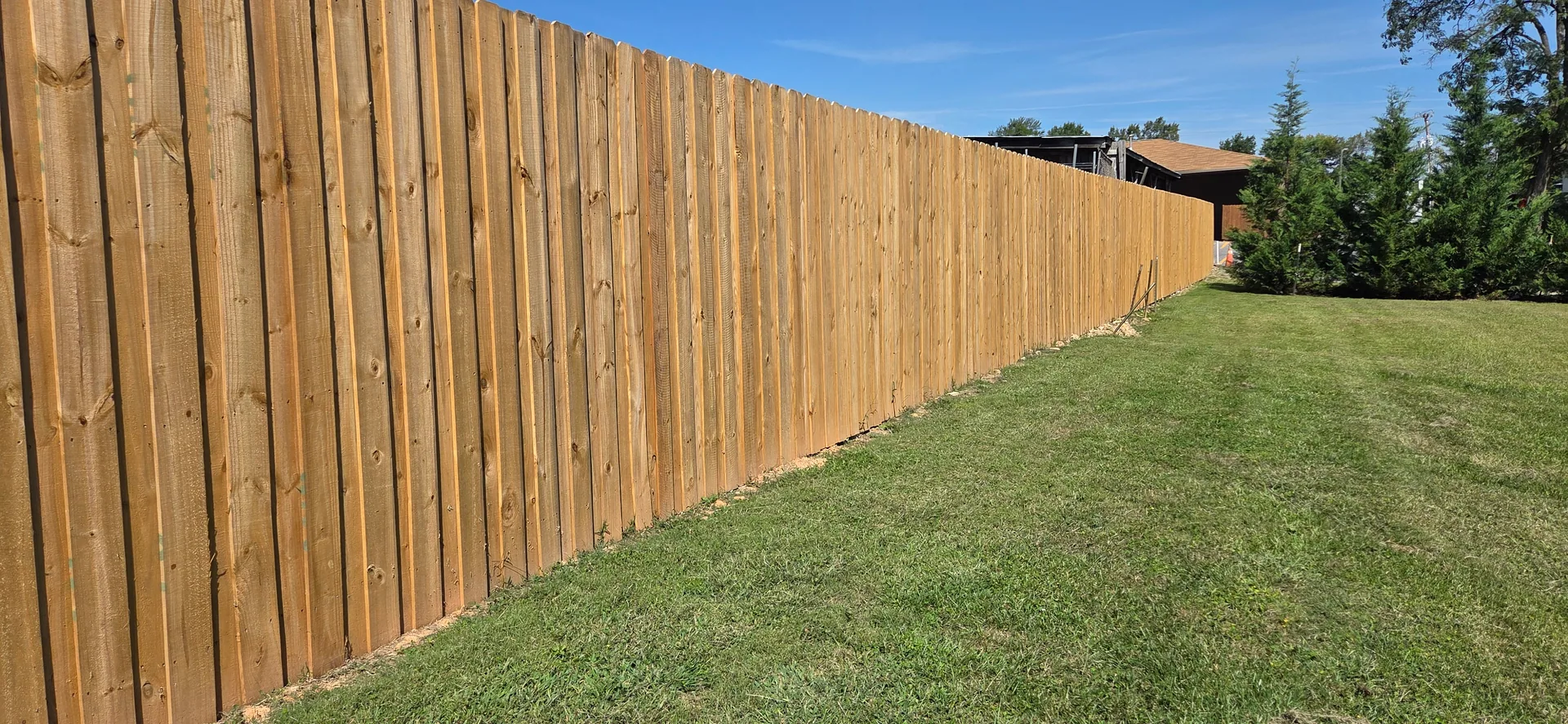
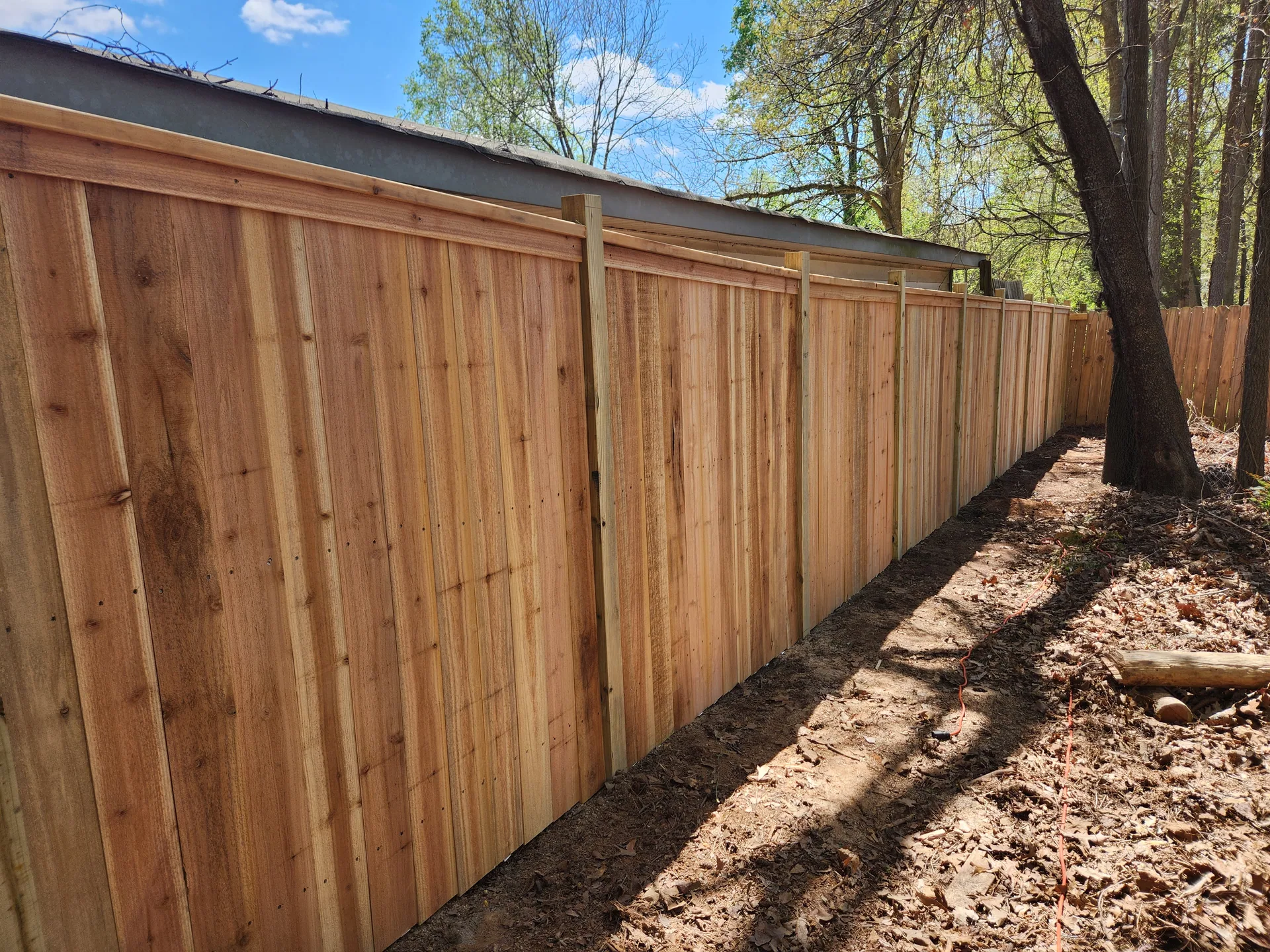
Many homeowners assume a new fence has to wait until spring. The yard looks bare, the air is cold, and building anything outdoors in December or January feels like asking for trouble. In the North Carolina Piedmont, though, winter fence installation is not only possible, it is often practical. Here is what actually changes when you build in the colder months, what can slow a job down, and why you do not necessarily have to wait.
Is Winter Fence Installation Practical in North Carolina?
For most of the state, and certainly around Gastonia and the rest of Gaston County, the answer is yes. Winters here are mild compared with the northern states. Hard freezes come and go, but the ground rarely stays frozen deep or for long stretches, and most winter days are workable for setting posts and hanging panels.
That matters because the hardest part of any fence is the posts. If a crew can dig the holes and set the posts properly, the rest of the fence (rails, pickets, panels and gates) goes up much the same in January as it does in May. A fence built well in the winter is just as sturdy as one built in the spring.
Winter is also a busy season for fence work in our area. Plenty of homeowners use the start of the year to finish projects they put off during the holidays, so building in the colder months is far from unusual.
How Weather Affects the Fence Installation Process
Cold weather does not stop a fence project, but it does change how the work is planned. These are the conditions that matter most.
Frozen or Saturated Ground
A hard overnight freeze can leave the top layer of soil stiff in the morning, which can slow digging until it thaws. In the Piedmont, rain is usually the bigger factor. Our red clay holds water, and a stretch of wet weather can turn a yard into mud that is difficult to work in and easy to damage. A good crew watches the forecast and builds on the days when the ground is ready.
Setting Posts in Cold Temperatures
When posts are set in concrete, temperature affects how the concrete cures. Concrete sets more slowly in the cold, and freezing temperatures right after a pour can weaken it. That is why winter post setting is planned around the forecast, so the concrete has the conditions it needs to cure properly before a hard freeze.
Rain, Ice and Daylight
Shorter days mean fewer working hours, and ice or heavy rain can push a job back a day or two. These are scheduling issues rather than reasons to avoid winter altogether. A project may simply take a little longer from start to finish than it would in milder weather.
Materials in the Cold
Wood, chain link and aluminum all install well in cool weather. Vinyl becomes stiffer and less forgiving as temperatures drop, so it is handled with more care on very cold days. Wood that goes up in the winter has time to settle and dry before you stain or seal it in warmer weather.
Why You Do Not Have to Wait Until Spring
The best time to install a fence is when you need one, and for many families that is now, not months from now. A few reasons to consider building in the winter:
- Your fence is ready when you need it. If you want a safe space for a dog or children by spring, building in the winter means the fence is up before the warm weather arrives.
- Easier access to your yard. With grass dormant and leaves down, crews can see the ground, the fence line and any obstacles more clearly, and there is less landscaping in the way.
- Less disruption to your lawn and garden. Work done while plants are dormant is less likely to interfere with flower beds, gardens and spring plantings.
- Planning ahead in a busy season. Fence work in our area picks up early in the year. Getting your estimate and your spot on the schedule early helps your project move forward on your timeline.
What to Expect From a Winter Fence Project
The process is the same as any other time of year. It starts with a visit to walk the property, talk through materials, gates and placement, and check the rules for your address and any homeowners association. From there, the main difference is a little more flexibility in the schedule. If rain soaks the ground or a hard freeze is in the forecast, the installation may shift by a day or two so the posts are set in the right conditions.
What stays the same is the quality of the result. A winter-built fence, set properly, will stand for years just like one built in the spring.
Thinking About a Fence This Winter?
If you are weighing whether to build now or wait, the short answer is that winter fence installation in North Carolina is usually a practical choice. Weather can change the schedule, but it rarely changes the outcome.
J & G Fence Company, Inc. has built fences across Gaston County since 1989 with our own in-house crews. Call (704) 868-3559 or request a free estimate, and we will walk your property, talk through the timing and give you a written estimate.