A new fence is one of those projects that looks simple from the street. Pick a style, pick a height, set some posts. In practice, the fences that turn out best are the ones that were planned before anyone picked up a shovel. A few hours of planning can save you from a fence in the wrong spot, a style your neighborhood does not allow, or a post driven through a buried line.
J & G Fence Company, Inc. has built fences for neighbors across Gaston County since 1989. Over that time we have seen the same handful of planning questions come up again and again, from Gastonia and Belmont to Mount Holly, Dallas and the towns across the line in South Carolina. This guide walks through them in the order we suggest you think about them, so that by the time you ask for an estimate, you already know what you want the fence to do and where it can go.
Step 1: Decide What the Fence Has to Do
Before you think about wood or vinyl, think about the job. Every fence decision that follows, from height to material to gates, comes back to what you need the fence for.
Some of the most common reasons homeowners call us:
- Keeping pets in. A dog that jumps needs height. A dog that digs needs a fence that sits close to the ground with no gaps at the bottom.
- Privacy. Blocking the view from a neighbor's deck or a busy road calls for a solid fence, usually wood or vinyl, at a height tall enough to do the job.
- Safety around a pool. A pool fence and its gates have to meet pool code.
- Marking a property line. An open style such as split rail or post-and-rail marks the line without closing in the yard.
- Keeping children safe in the yard. A fence with secure gates and latches out of small hands' reach matters more here than looks.
- Appearance. Sometimes the fence is mainly there to finish the look of the property.
Most fences do more than one of these jobs. Write down which ones matter to you and rank them. A fence that keeps a large dog in and blocks the view of a road is a different fence from one that simply marks a line, and knowing your priorities keeps you from paying for more fence than you need.
Step 2: Know Where Your Property Line Is
This is the step that causes the most trouble when it gets skipped. A fence built even a little over the property line can lead to a dispute with a neighbor, and in the worst case, a fence that has to come down.
Start with the documents you already have. Your closing papers may include a survey or a plat showing the boundaries of your lot. The county's property records and maps can also give you a general picture of your lot lines, though online maps are not precise enough to build a fence on.
If you cannot find a survey, or if the corner markers on your property are missing, a licensed land surveyor can locate and mark the lines. It is an extra cost, but on a lot where the boundary is unclear, it is far less expensive than moving a fence later.
A few more things to keep in mind:
- Do not rely on an existing fence as proof of where the line is. Old fences were not always built on the line.
- Talk with your neighbors before the work starts. Letting them know your plans, and where the fence will sit, heads off most disagreements before they begin.
- Many homeowners set the fence a little inside the line so the whole fence, including the posts, is clearly on their own property.
Step 3: Check the Rules That Apply to Your Lot
Fences are one of the most regulated parts of a yard, and the rules come from more than one place. Check each of these before you settle on a height or a style.
Your town or county. Many towns and counties have rules about fence height, placement near streets and sidewalks, and fences on corner lots where a tall fence could block drivers' view. Some require a permit before a fence goes up. The rules differ from one town to the next, and they can be different inside city limits than in the county. Call or visit the planning or zoning office for the town your property is in, or the county office if you are outside city limits, and ask what applies to a residential fence.
Your homeowners association. If you live in a neighborhood with an HOA, read the covenants before you choose anything. Associations commonly set rules on fence material, height, color and style, and many require written approval before work begins. Some also say which side of the fence has to face out. Getting approval first is much easier than asking forgiveness after the fence is built.
Easements. Your survey or plat may show easements, such as a utility or drainage easement along the back or side of the lot. Building in an easement can mean the fence has to be removed if work is ever needed there, so it is worth knowing where they are.
Pool code. If the fence encloses a pool, the fence and its gates have to meet pool code. Ask about it early, because it affects the height, the style and the gate hardware you can use. Our pool fence page covers the options we build.
Step 4: Call 811 Before Anyone Digs
Every fence post means a hole in the ground, and underground there may be electric, gas, water, cable or phone lines. Hitting one can be dangerous and expensive.
In North Carolina, the free service for this is NC811. You can reach it by dialing 811 or by placing a request online. State law requires three full working days' notice to the utility owners before digging begins, and NC811 lists installing a fence among the projects that need a request. The utilities then mark the location of their lines on your property at no charge. If your property is in South Carolina, the same kind of free service is available through SC811.
Keep in mind that the utilities mark the lines they own. Lines you own yourself, such as a line running to a detached garage, a well or an outdoor light, are generally not marked by the utility, so make a note of where those run.
Before the work starts, ask your fence company who will place the 811 request, so nobody assumes the other person did it.
Step 5: Choose a Material That Fits the Job and Your Upkeep
With your priorities, your property line and the rules in hand, you can choose a material with confidence. Each common choice has its own look, price level and upkeep.
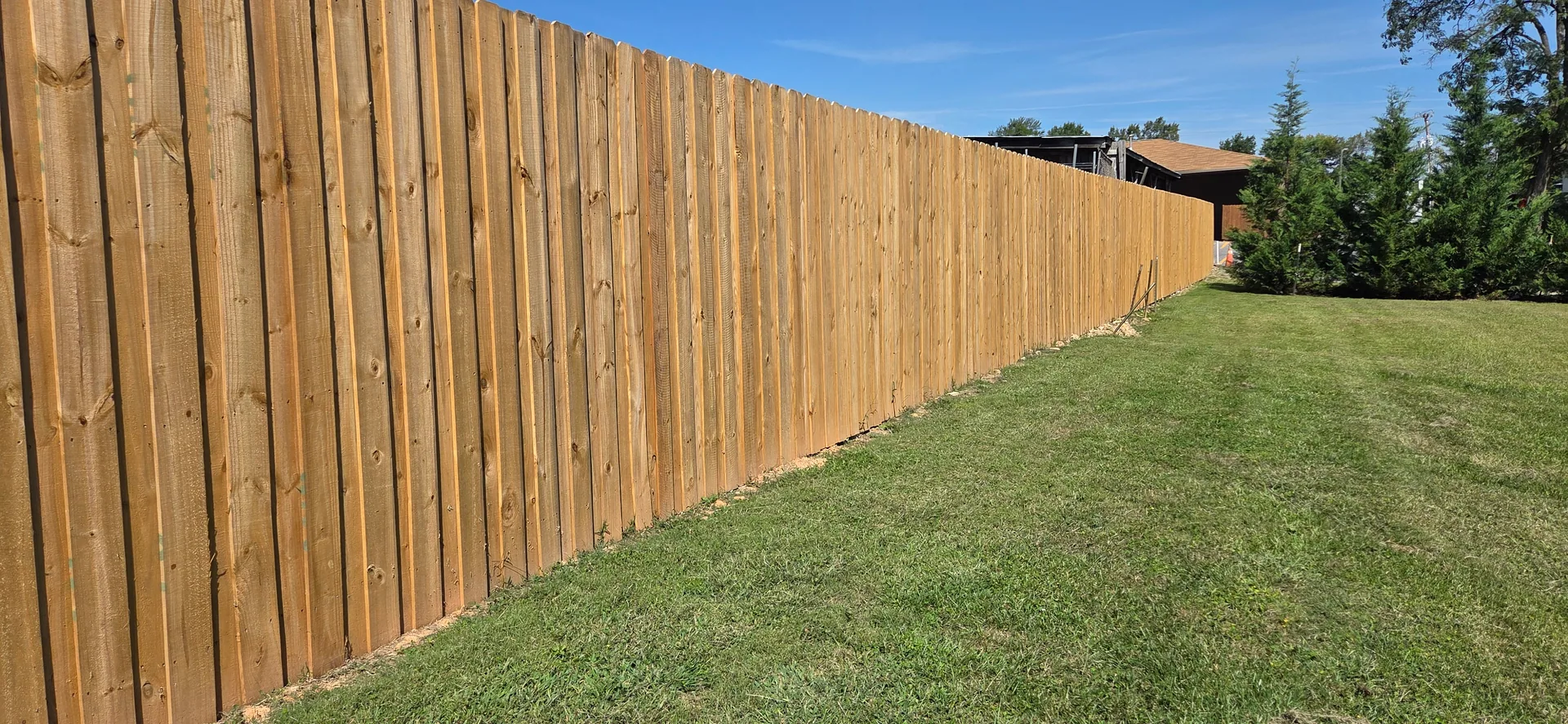
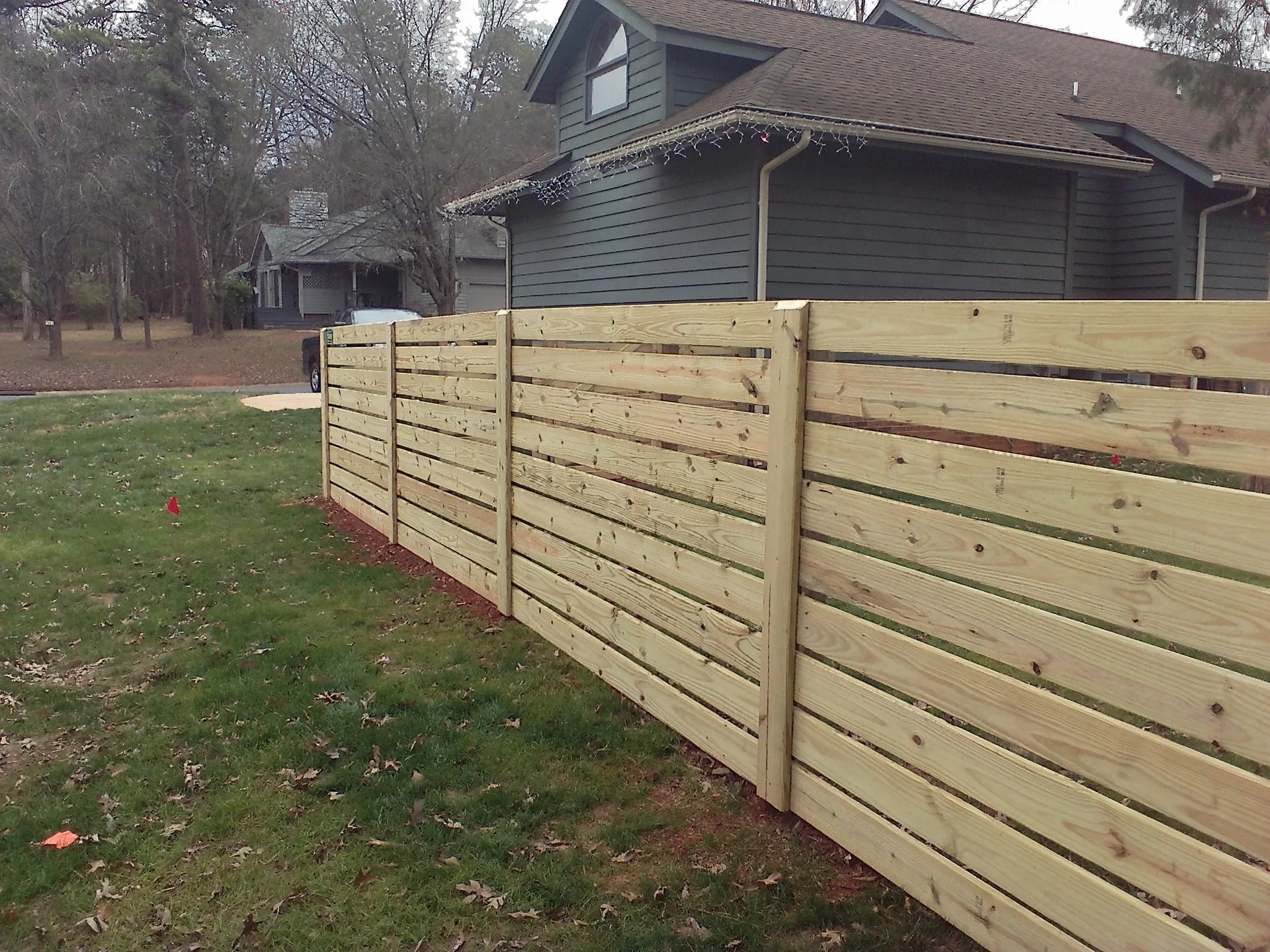
Wood is the most common residential fence we build. It comes in many styles, from dog-ear and stockade to board-on-board and shadowbox, and it works well for privacy. Wood takes stain or sealer over the years to look its best. Read more about wood fence installation.
Vinyl, or PVC, needs little upkeep and comes in privacy and post-and-rail styles. It is a good fit if you want a clean look without regular staining. Compare our vinyl fence styles.
Aluminum and ornamental steel add a decorative look, leave the view open and can meet pool code. See our aluminum fence styles.
Chain link is a practical, durable way to fence a yard or a pet area. You can choose galvanized or black vinyl-coated wire. See our chain link fence options.
Split rail and post-and-rail fences use less material per foot and suit farms, acreage and property lines. Read about our split rail fence work.
When you compare materials, weigh upkeep along with the upfront price. A fence that costs less to build but needs more care each year may not be the better value over time.
Step 6: Plan the Height, Layout and Gates
Height comes straight from the job the fence has to do and the rules that apply to your lot. A taller fence uses longer posts and more boards or panels, so height raises the price per foot.
The layout is where you can often save money without giving anything up. Fencing only the back yard, or leaving out a side that already has a neighbor's fence, shortens the run. A long, straight run spreads the setup over more feet, while a short run with many corners takes more labor for its size.
Gates deserve more thought than they usually get. Think about everything that will need to pass through:
- A walk gate for everyday use
- A wider gate or a double drive gate for a mower, a trailer or a boat
- A gate placed where you actually walk, not just where it is easy to put one
Each gate needs heavy posts, hardware and careful hanging, and a double drive gate costs more than a single walk gate. Planning gates up front avoids having to add one later. Our fence gates page shows how we build them.
Step 7: Look at the Ground
The ground your fence sits on shapes how it is built. Slopes, roots, rocks and soft spots all change how posts are set and how the fence follows the land.
On a sloped yard, a fence can step down the hill in level sections, or follow the slope so the top runs parallel to the ground. Each looks different and handles gaps at the bottom differently, which matters if you are trying to keep a small dog in. Trees along the fence line may mean adjusting where posts go. Low spots that stay wet after rain are worth pointing out, because soaked ground holds posts less firmly.
If an old fence is still standing, it has to come out before the new one goes in. Removing and hauling it away adds to the job, so make sure it is included in any estimate you get.
Step 8: Think About Timing
Fences can be built through much of the year in our part of North Carolina, but timing still matters. Spring is a popular time to start yard projects, so it can help to plan ahead. If you are wondering about building in the colder months, we covered that in Can You Install a Fence in the Winter in North Carolina?
Leave time for the steps that come before the build: a survey if you need one, HOA approval, any permit your town requires and the three full working days for 811 marking.
Step 9: Get a Written Estimate You Can Compare
When you are ready, get your price in writing. A clear estimate should list the material, height, length, number and size of gates and whether old fence removal is included.
If you are comparing more than one estimate, line them up on those same points. Two estimates for the same yard can differ because they price different fences: one may use heavier posts or better hardware, while another leaves out removal. Our fence cost guide explains what moves the price. In our area, a typical 6 foot wood privacy fence runs about $18 to $27 per linear foot installed, though that is a typical range and not a quote.
A Quick Planning Checklist
Before you call for an estimate, it helps to have these answers ready:
- What the fence needs to do, in order of priority
- Where your property line is, and whether you have a survey
- What your town or county and your HOA allow
- Whether there are easements or a pool to plan around
- The material you are leaning toward and why
- The height you need and the gates you will use
- Anything about the ground, such as slopes, trees or wet spots
- Whether an old fence has to come out
Plan Your Fence With J & G
You do not have to work through every step alone. When you call us, we come out, walk your property with you and talk through the job the fence has to do, the layout, the gates and the ground. We tell you honestly what your property needs, not what costs the most, and we put the full price in writing at no cost.
J & G Fence Company, Inc. is locally owned, and our own crews do the work, so the plan on paper is the plan they build. Call (704) 868-3559, Monday to Friday, 8:00 AM to 5:00 PM, or request a free estimate. You can also browse every material we install on our residential fencing page, or check the towns we serve on our service areas page.